Smart Joint Large Diameter HDPE Fitting with no pressure derating
Views : 1754
Author : FRAN
Update time : 2025-08-30 15:39:39
Per ISO4427 standard, for fabricated elbow, there is detailed pressure derating rules. To get a pressure non-derating elbow, the cutting angle β need be ≤7.5°, for example, to get a 90° pressure non-derating elbow, it requires 7 segments. When it goes to large diameter, the efficiency to get a pressure non-derating elbow is low. Each joints quality need be guaranteed and be traced back with welding process data record. When the customer send inquiry, most of the suppliers don’t clarify with drawings for the fabricated elbows. That might bring potential leakage or burst risk for the pipe lines’long term operation under pressure. der p
Per standard ISO4427, if fabricate with pipes, there is a 50% pressure derating for fabricated tees.
It’s important to confirm with end customer’s pipe operation pressure and the design safety ratio. Then to select the right solution for the customer.
The terms "high-pressure welding" and "low-pressure welding" are common but informal designations in the polyethylene (PE) pipe industry, referring specifically to the fusion pressure applied during the butt fusion process. These terms describe the fundamentally different approaches to calculating fusion pressure in the two major global standards: ISO/DVS (European) and ASTM (North American). This article clarifies the technical distinctions, calculation methodologies, and practical implications of these two approaches. In this landscape of two dominant standards, the SMART JOINT series( some models) of butt fusion machines is engineered to deliver uncompromising precision, reliability, and ease of use for both ISO/DVS (low-pressure) and ASTM (high-pressure) welding methodologies.
Dual-Standard Intelligence: Some models of SMART JOINT machines are designed ok for both ISO/DVS and ASTM standards.
Optimized for High-Integrity Joints: Whether executing a precision low-pressure weld for a large size robust high-pressure weld for industrial process piping, SMART JOINT's consistent alignment, accurate temperature, and precise welding pressure control ensure a perfect, full-strength fusion joint every time, with the ideal bead profile for the related standard.
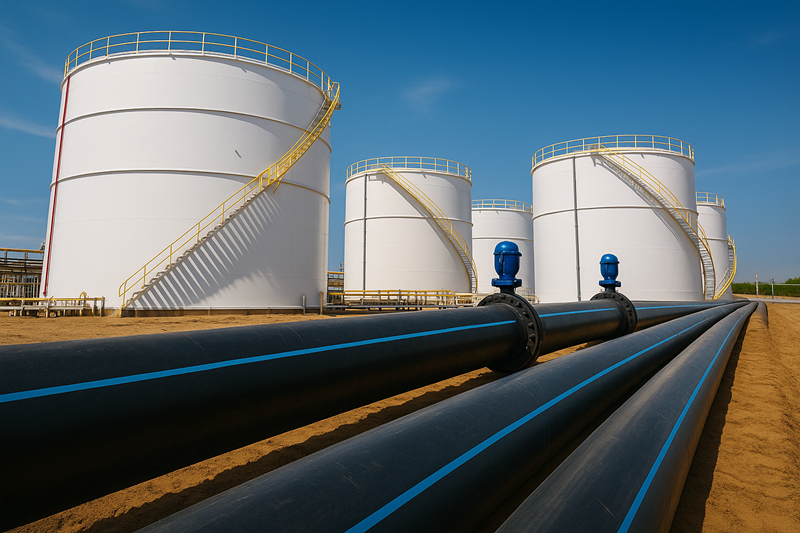
In the OIL & GAS industry, PE fittings are primarily used in low-pressure, non-high-temperature, corrosive environments, and areas with special safety and environmental requirements. SMART JOINT provides robust and corrosion‑resistant HDPE piping systems for the oil and gas industry, supporting applications from produced water management and gas gathering to pipeline protection and spill containment.
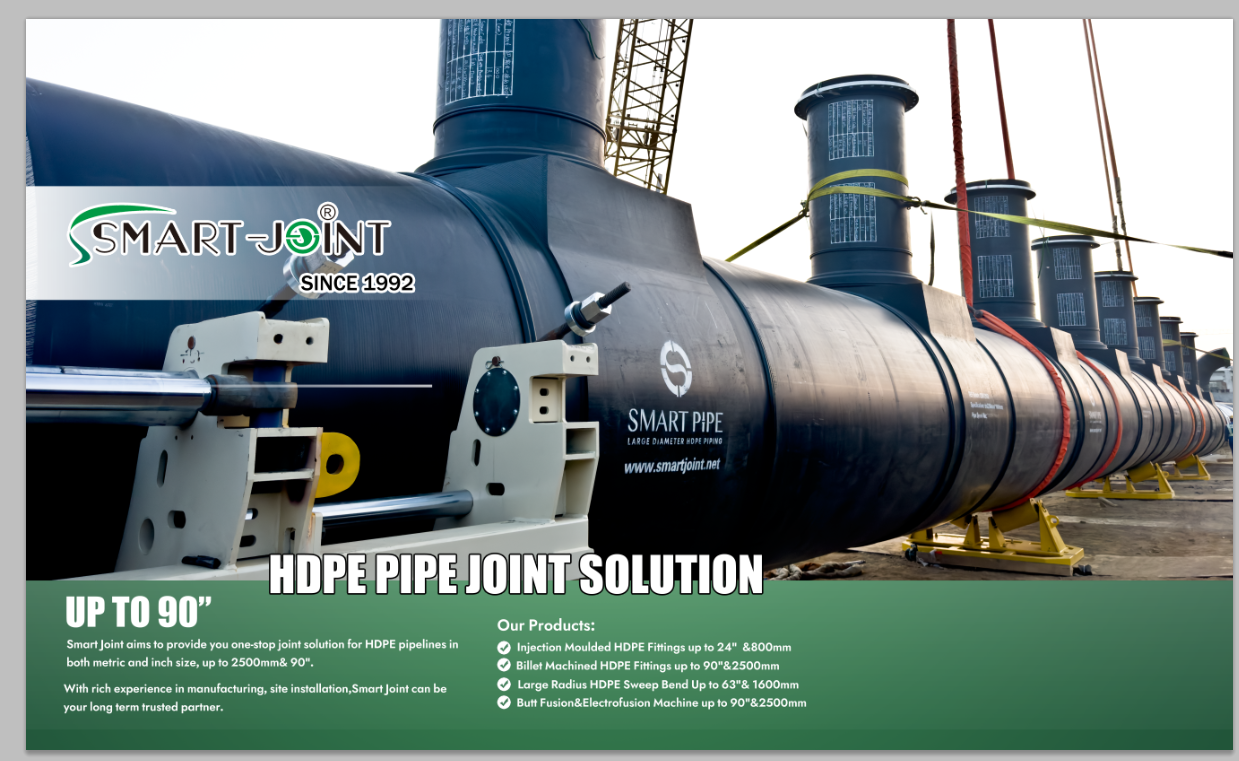
Smart Joint specializes in delivering comprehensive HDPE piping solutions up to 2500mm, supported by a full range of fittings, fusion machinery, and professional fabrication services.