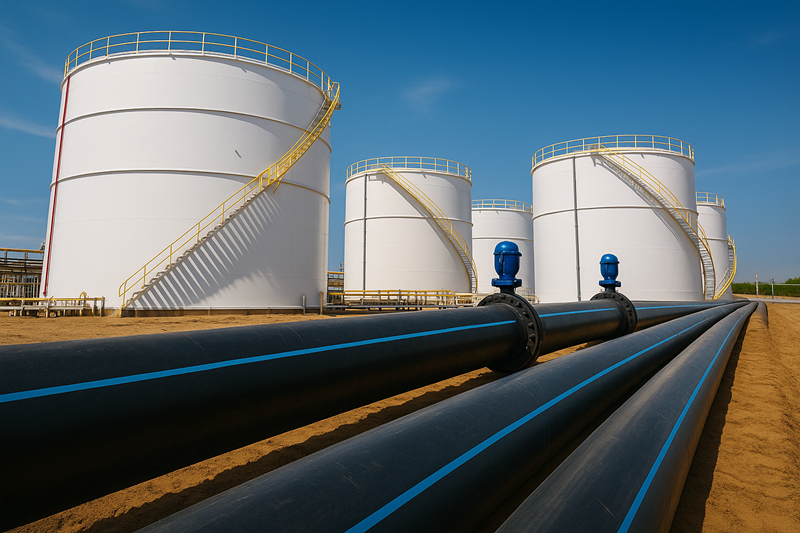
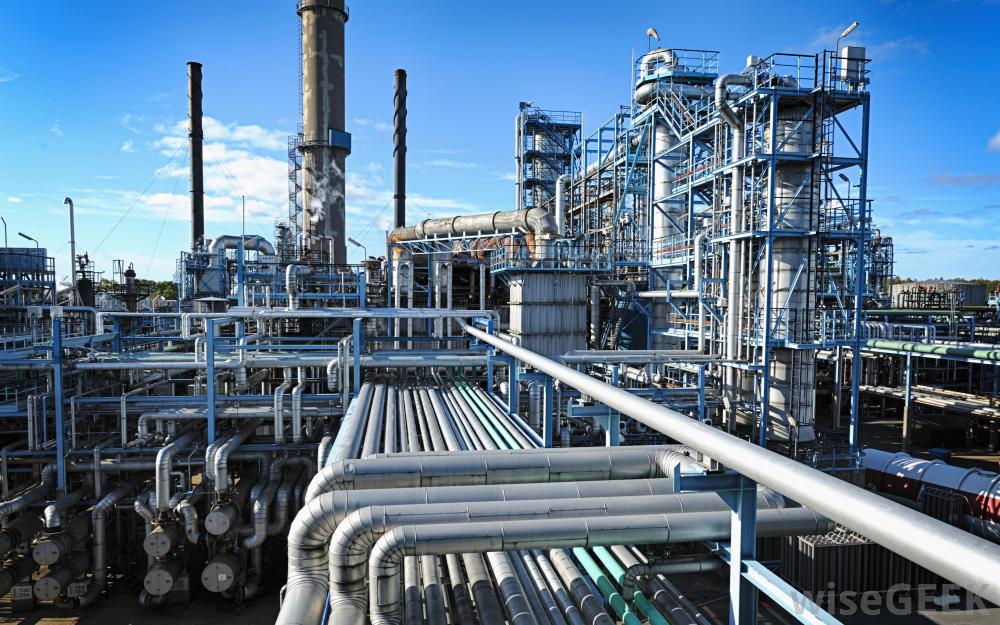
In the OIL & GAS industry, PE fittings are primarily used in low-pressure, non-high-temperature, corrosive environments, and areas with special safety and environmental requirements. The specific application areas are as follows:
Core Application Areas
Natural Gas Distribution Systems
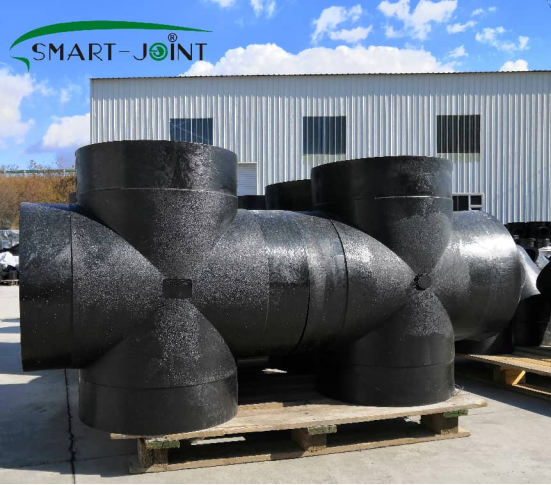
Medium- and low-pressure city gas pipelines: PE fittings are widely used in medium- and low-pressure gas transmission (≤0.8 MPa) after gate stations, including branch pipes, tees, reducers, etc.
Connections for pressure regulating stations and end-users: Such as gas supply pipelines for residential areas, industrial, and commercial users.
Oilfield Produced Water and Water Injection Systems
Produced water treatment and reinjection: PE fittings are corrosion-resistant, suitable for conveying oily wastewater and high-salinity formation water.
Chemical injection pipelines: Such as pipelines for injecting corrosion inhibitors, scale inhibitors, etc.
Chemical Medium Transportation
Non-high-temperature corrosive fluids: Such as low-pressure acid, alkali, liquid ammonia, etc., for in-plant pipelines (requiring chemical-resistant PE100 or cross-linked polyethylene fittings).
Environmental and Safety Systems
Vapor recovery pipelines: Vapor recovery pipelines for gas stations and oil depots.
Firewater systems: Low-pressure firewater pipelines in oilfields and chemical plants.
Exhaust gas/wastewater collection pipelines: Such as desulfurization wastewater, VOCs collection pipelines.
Subsea Pipelines (Special Scenarios)
Internal lining of subsea multiphase pipelines: Composite pipes with PE lining for corrosion prevention, used to transport corrosive oil and gas media.
Subsea water injection pipelines: Low-pressure water injection pipelines for shallow-water oilfields.
Selection and Standard Requirements
Material Grade: Must use PE100/PE4710 or higher grades. For high-pressure applications, PE100-RC (resistant to slow crack growth) is recommended.
Special Requirements:
PE fittings for gas must contain 2.5% carbon black for UV resistance.
Chemical compatibility reports are required for transporting chemical media.
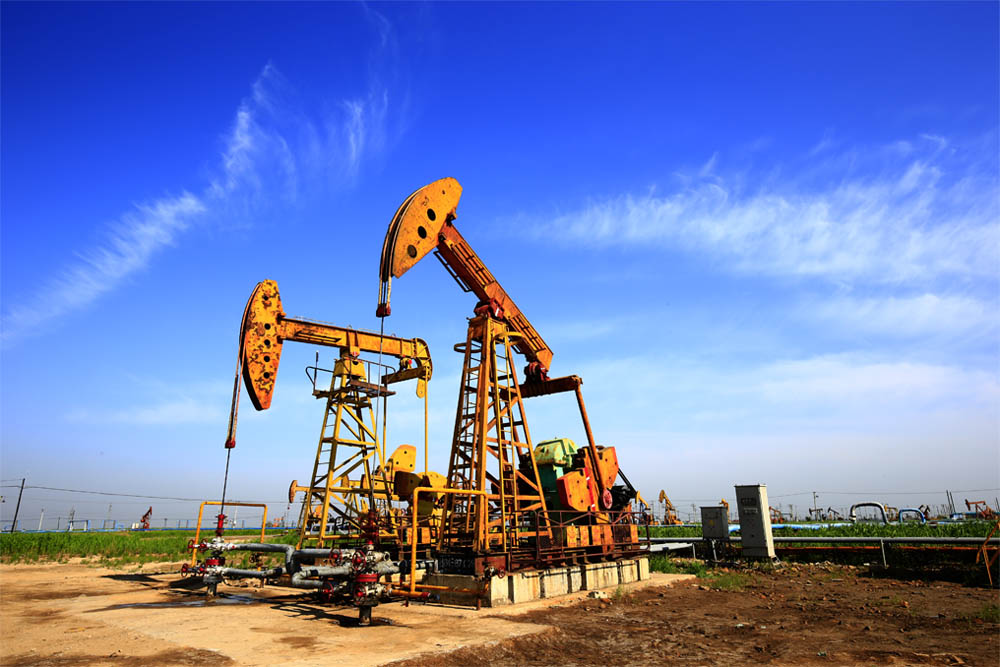
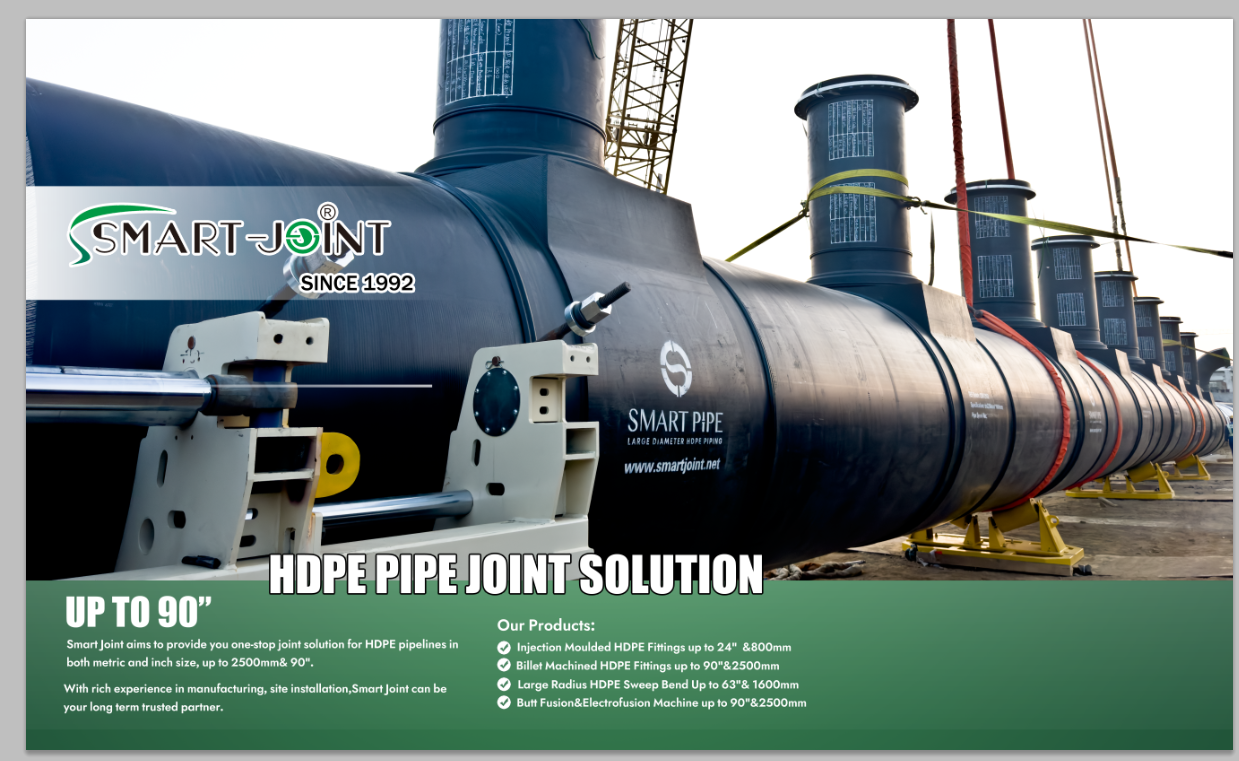
Smart Joint extensive research and technical expertise confirm that HDPE's properties make it an ideal material for oilfield and gas gathering systems. It provides excellent impact resistance, high tensile strength, low moisture absorption, and strong chemical and corrosion resistance. Easy to handle on-site, it is a leading choice for piping applications. Smart Joint has supplied HDPE for a wide range of energy sector uses, including:
-
Transport across all three production phases
-
Crude oil, natural gas, brine, and produced liquids in gathering and return applications—both pre- and post-separation
-
Wastewater, drain water, and acidic or alkaline water handling
-
Carbon dioxide service and sour gas operations
-
Sliplining rehabilitation of aging oilfield pipelines
-
Coal seam methane recovery
-
Water supply lines for drilling operations
SMART JOINT provides robust and corrosion‑resistant HDPE piping systems for the oil and gas industry.